Can the glasses on your face stream what you see to a person far away? Here is the story of the Meta Ray-Ban, what it can do, and exactly where it stops.
A remote person watches your live camera and you talk to each other. Your point of view, streamed in real time, hands-free. The expert sees the machine, the part, or the room exactly as you see it, and guides you. That is the whole feature, and it sounds simple, until you ask which glasses can actually do it.
Meta did not arrive at see-what-I-see in one step. It took four years and four products.
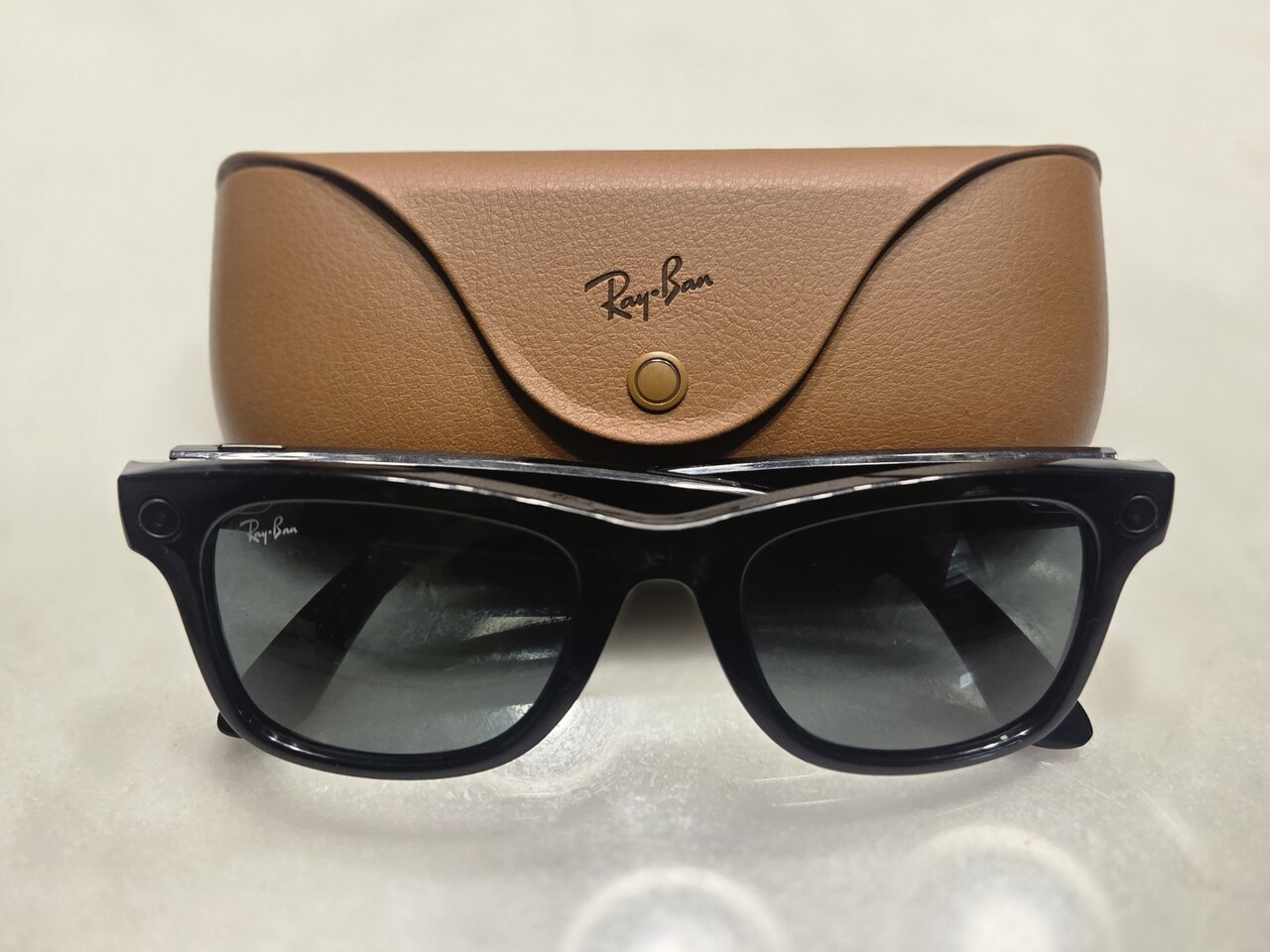
Facebook's first camera glasses. A 5 MP camera to grab photos and short clips. No AI, and no live calling. A camera on your face, but a closed one.
The big step. A 12 MP camera, a five-microphone array, Wi-Fi 6, livestreaming, and Meta AI by voice. This is the model that made hands-free video real.
A multimodal update, look at something and ask about it, plus live translation in several languages spoken into your ear.
Oakley Meta for sport in June, then the Ray-Ban Display in September, the first with a small screen in the lens and a Neural Band on the wrist.
Today the Meta Ray-Ban genuinely does a form of see-what-I-see. This is where my earlier blanket "consumer glasses cannot" was wrong.
On WhatsApp, Messenger, or Instagram, switch the live feed to the glasses camera during a video call, so the other person sees what you see.
A remote volunteer watches your live camera and describes what is in front of you. This is real see-what-I-see, built in.
Ask Meta AI about what you are looking at, get an answer in your ear, without touching a phone.
Several languages translated into your ear in real time, good for everyday travel and chat.
Here is the heart of it. The camera is not fully walled off, but today it opens to Meta's own apps and, in a new developer preview, to a few named partners. It still does not open to an outside tool you choose. Tap any app below.
Tap an app to see if the glasses camera can reach it.
You can stream into Meta's chat apps, but not into the support tool your team chose. A factory expert cannot just dial in.
The standard Ray-Ban Meta has no display, so the worker cannot see what a remote expert points at. The Display model adds a small screen, but it is a different, pricier product.
No expert console, no recording, no work-instruction flow. It is built for family and friends, not a service team.
A consumer glass does not refuse to stream its camera. It streams through the maker's own apps, and now through a few named partners in preview, but not yet through any app you choose.
Meta Ray-Ban proves see-what-I-see is possible on a consumer glass, on Meta's terms, into Meta's apps. For a factory expert workflow, an open industrial glass that runs your own Teams or Zoom still wins.