Where this is heading
What could change the picture after the October demo. Google's Android XR platform, the move to spatial computing glasses, the devices arriving through 2027, and what each means for the client.
The platform
Android XR
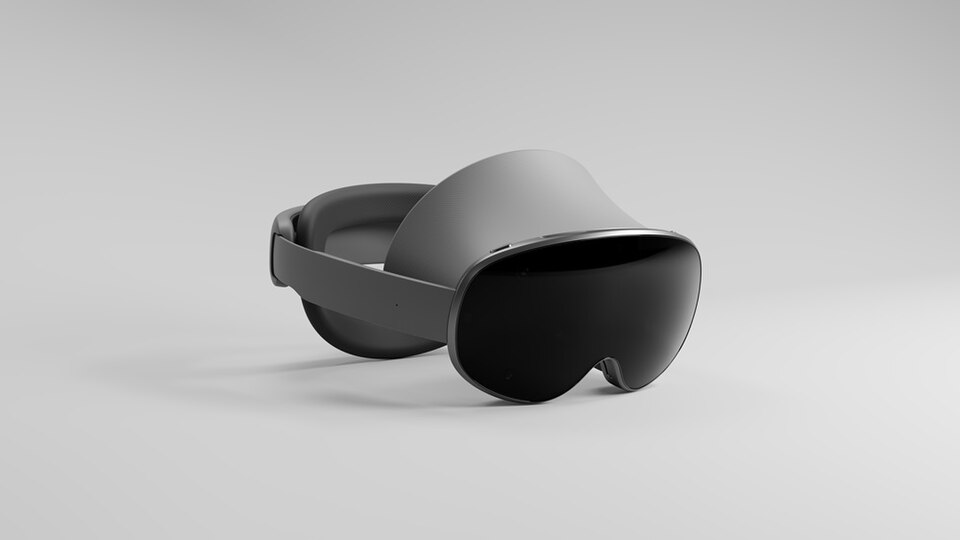
Android XR is Google's operating system for headsets and glasses, built with Samsung and Qualcomm, with Gemini AI built in. It runs normal Android apps and uses open standards, and it comes in three tiers.
The headset
Samsung Galaxy XR. Full depth and 6DoF. US and Korea only.
Display glasses
XREAL Project Aura. A screen, a camera, and Gemini, in a glass. Japan first wave.
Audio glasses
Samsung, Warby Parker, Gentle Monster. Voice and camera, no display yet.
The shift
Spatial computing glasses
Today's "display glasses" only show a screen floating in front of you. Spatial computing glasses are different: they understand the room in 3D, track your head in full 6DoF, see through a camera, and place things in the real world, all in a light pair you could wear all day. Apple calls this spatial computing on the Vision Pro. The rest of the industry is racing to shrink it from a headset into glasses.
Why this matters for the client: the moment a worn glass has all of 6DoF tracking, a depth or world camera, and an open camera SDK, our whole "split the stack" design collapses. One light glass would then share the view, translate, and measure on its own, with no paired phone and no printed marker. That is the future we are building toward.
Today that full set only exists in bulky headsets. The light-glass version is arriving in steps: XREAL Aura in 2026, Samsung's display glasses in 2027, and Meta's true-AR glasses after that. Each step moves more of the work onto the glass itself.
The roadmap
What is coming, and when
Dated by how firm the date is. Green dots are shipping now, violet are near and fairly firm, amber are further out or leak-grade.
If we build it ourselves
The self-develop path
If the client builds the apps in-house, the question changes. It stops being "does an off-the-shelf app exist" and becomes "which glass gives our developers the open camera and depth, and lets us deploy our own app." On that test the open platform wins, and that platform is Android XR.
What it means for us
How to act on the future
Lock the present, track the future
- For the October demo, lock the current picks. Nearly all of this lands after the demo, and most is not sold in Japan or Thailand yet. The glass-plus-phone stack stays the safe choice.
- Track XREAL Aura as the rollout glass. It is the first Android XR glass with a display, a camera, and a confirmed Japan launch in Fall 2026, and it could do more of the work on the glass itself.
- Watch three triggers. Meta opening its glasses camera to any app (a possible Teams path), Samsung's 2027 display glasses, and the first worn glass with a full camera and depth SDK. Any of these could let one glass replace the glass-plus-phone stack.
- Re-check before you buy. Vendor language lists, prices, and regions move fast, as Meta adding Thai showed. Confirm at purchase.